
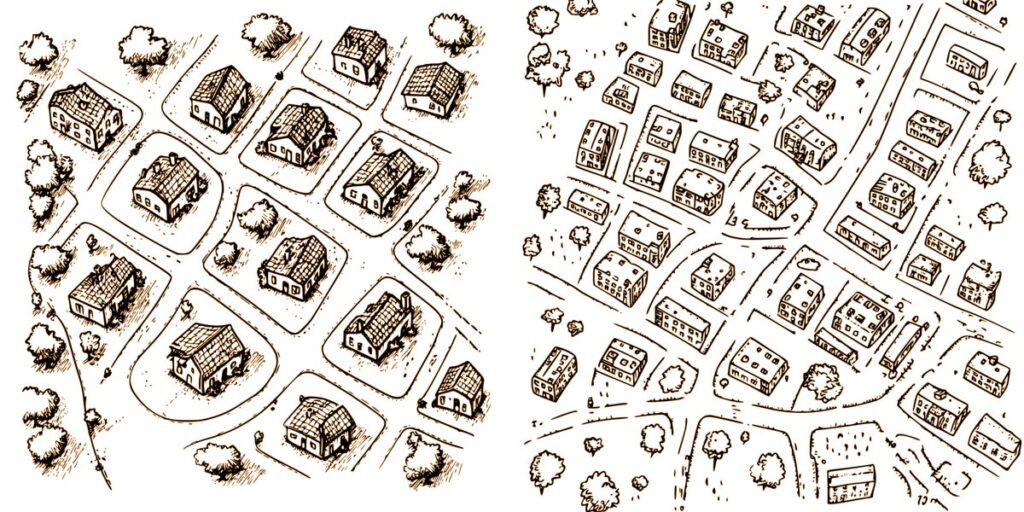
Cortland West is one of those neighborhoods where the past gently blends with the present. Nestled just beyond the bustling heart of Cortland, NY, this area is often seen as a quiet, close-knit enclave—yet its story is rich with the echoes of history, growth, and community spirit. For residents and visitors, Cortland West offers an inviting perspective on how neighborhoods shape—and are shaped by—the people who call them home.
Roots in Rich Soil: Origins of Cortland West
Before there were cul-de-sacs and schools, Cortland West was defined by its sweeping fields and family-run farms. The neighborhood’s earliest chapters stretch back to the 19th century, when this region was part of sprawling agrarian parcels that ringed the city. Much of this farmland was owned and worked by a handful of families whose names—like Wheeler, Kinney, and Munson—remain notable in local lore, surviving on street signs and neighborhood institutions.
The area’s name, Cortland West, comes not just from its location on the western edge of the city, but from a sense of distinct identity. Residents here saw themselves as part of the greater Cortland story, yet separate from its downtown bustle—a place where fields gave way to family gatherings, and where traditions grew as surely as the crops once did.
Key Historical Milestones
- Late 1800s to Early 1900s: The primary economy of the area was agriculture. Roads like West Road (Route 281) and Barron Road were originally rough-hewn tracks for wagons, connecting farmsteads to downtown.
- Mid-20th Century: The postwar boom brought change. In the 1950s and '60s, as Cortland expanded, some farmland was subdivided into residential lots. Homebuilders saw the appeal of peaceful lanes like Kinney Lane and Wheeler Avenue, and modest ranches and split-levels began to appear alongside barns and silos.
- 1970s: The construction of the Cortland West Elementary School on Route 222 marked a new era, as families flocked to the area for its reputation as a friendly and safe place for children. The school became not just an educational center but a community hub—hosting everything from concerts to annual craft fairs.
- Late 20th Century to Present: Modern development has been carefully managed to retain the neighborhood’s balance between green space and growth. Parks like Suggett Park, just a short drive east, continue to be recreation spots for kids and adults alike, while the edges of Cortland West give way to rolling fields and the gentle hills of the Finger Lakes.
Notable Landmarks and Institutions
While Cortland West never developed the dense, brick-faced landmarks of Cortland’s downtown, it boasts several sites ingrained in local memory:
- Cortland West Elementary School: More than just a school, it stands as the social heart of the neighborhood. The annual spring fair is a beloved tradition, gathering neighbors together for games, treats, and live music.
- Streets with Stories: Kinney Lane, Wheeler Avenue, and Munson Drive each recall the farming families and early settlers whose hard work formed the area’s backbone.
- Historic Farmhouses: Scattered throughout the neighborhood, these homes—some updated, some left in their original splendor—are reminders of a time when every plot hosted a vegetable garden and a chicken coop.
- Old Stone Walls and Barn Foundations: Along more rural stretches, particularly near Fisher Avenue and onto Starr Road, you’ll find remnants of 19th-century boundaries—the kinds of hand-laid stones that once fenced in sheep and cattle.
Evolution into a Modern Community
One of the most remarkable aspects of Cortland West is how it has managed to grow without losing its roots. While newer subdivisions and updated homes have appeared, the spirit of neighborliness endures. The pace is a bit slower here, and a walk along the tree-lined stretch of Route 222 still offers glimpses of deer, wild turkeys, and, come autumn, the dazzling colors of upstate New York’s foliage.
Local children attend the same elementary school their parents did, and community events—like summer yard sales or winter holiday light tours—are multigenerational affairs. Athletic fields and playgrounds, especially those neighboring the school, provide gathering points year-round.
Why Cortland West Feels Like Home
Ask any longtime resident, and they’ll tell you: Cortland West isn’t just a place, it’s a feeling. It’s the warmth of sharing produce from a backyard garden, the pride of seeing your child’s first baseball game at a local field, or the comfort of knowing your neighbors by name. It’s the blend of tradition and progress—a community that prizes its past even as it looks forward.
From the rumble of morning school buses on Northway Drive to the quiet sunsets over open farmland, Cortland West preserves a bit of what has always made upstate New York neighborhoods special—a connection to land, to history, and, most importantly, to each other.
In Cortland West, the story isn’t just about the land we live on—it’s about the lives we share. It’s a chapter in the larger tale of Cortland, surely. But for those who call it home, it’s the part that will always matter most.